INDUS VALLEY SCRIPT
73INDUS VALLEY SCRIPT
2600 BC– 1900 BC
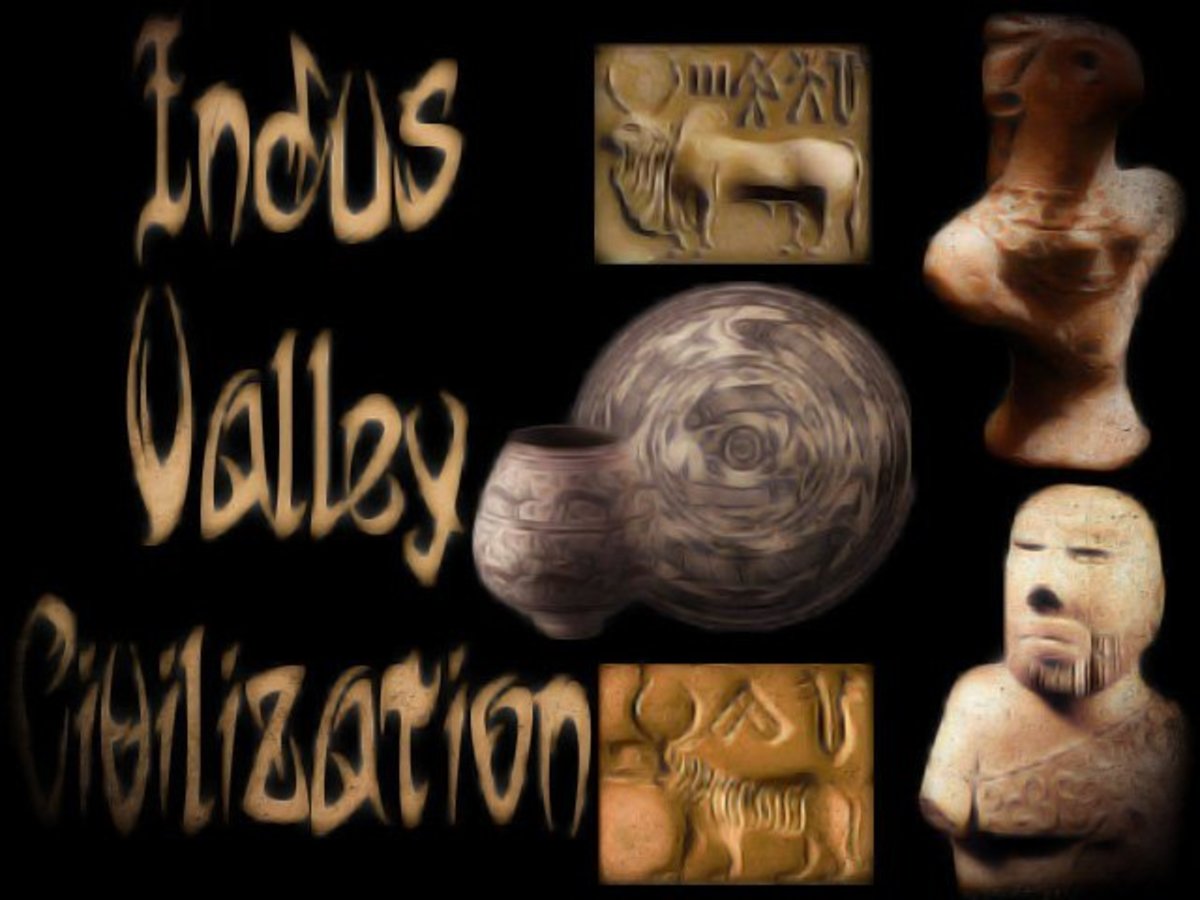
Two thousand inscribed seals were found in the ruins of Mohenjo-daro and Harrapa, and though it was known to scholars for more than 70 years they were unable to decipher it. The reasons are basically threefold;
· The texts are very short and brief
· Detail contents are in an unknown.language.
· There are no bilingual texts.
One theory that is propounded is that the language may be an isolate; however this theory is rather implausible.
A second view is that language could be "Aryan”; but the hitch is that, in none of the seals found in Indus valley, there are images of horses. Moreover in Aryan culture, horses played a very important role and were found to have existed only after 2000BC. So the theory that Indus valley script wer of Aryan origin does not hold water.
According to a third theory, Indus valley scripts were said to belong to the Munda family of languages spoken in Eastern India but there are no tangible evidences to substantiate this theory.
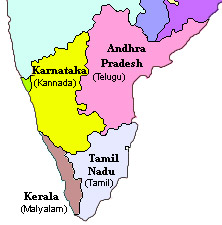
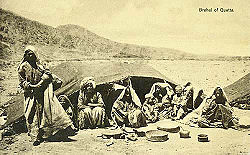
The fourth theory is that the script could be of Dravidian origin. Brahui which is a Dravidian language is spoken in modern Pakistan, and similar Dravidian languages like Tamil, Telugu, Kannada and Malayalam are still spoken in South India. In fact A Neolithic stone celt with the Indus Valley script has been discovered by a school teacher, in a village called Sembian-Kandiyur near Mayiladuthurai in Nagapattinam district, Tamil Nadu. According to Mr.Iravatham Mahadevan, a leading expert in Indus valley script, this discovery provides very strong evidence that the Neolithic people of Tamil Nadu and the Indus Valley people "shared the same language, which can only be Dravidian and not Indo-Aryan." Before this discovery, the southernmost occurrence of the Indus script was at a place called Daimabad, in Maharashtra on the Pravara River in the Godavari Valley
A possible indication of Dravidian in the Indus texts is from structural analysis of the texts. The maximum number of Indus script symbols is 400, of which 200 are basic signs .Indus script is probably logophonetic, in that it has both signs used for their meanings, and signs used for their phonetic values/
There are scholars who hold the view that these signs are purely ideographical and contain no information of the languages spoken. Steve Farmer, Richard Sproat, and Michael Witzel hold this view and this probably explains the brevity of the script .
:
.
http://www.ancientscripts.com/indus.html
http://www.hinduonnet.com/2006/05/01/stories/2006050112670100.htm
http://www.harappa.com/script/index.html
http://asnic.utexas.edu/asnic/subject/peoplesandlanguages.html
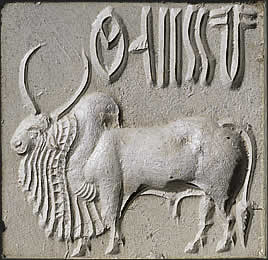
Deciphering the Indus Valley Script
CommentsLoading...
Nice hub about Indus valley scripts.
In the seel above is the unice identity number of the citizen picture shows the professions of that citizen
it wz really intersting...
Very Interesting hub. The puzzle of Indus valley script indeed remains unsolved for such a long time. Most people now think that it is a logo-syllabic. That is what perhaps you mean by logo-phonetic?
It is indeed great to see that some signs are found in south. Information you give is very interesting.
I think Indians are not any way surprised much. Is it not true that now it is quite well established that similar set up was much more on banks of now dried out but earlier much bigger Saraswati river than just on Indus and it went quite a bit to south (I think many experts in USA also agree, though our old History experts, so called secular lot, who still perhaps rule in India, most of History circle, do not want to change the position they had strongly taken all their life- I wonder why- after all any good researcher will want to explore new ideas if some new evidences appear.).
Are there no other places in other ruins where similar seals are found? I had once heard in an interesting lecture that some of these seals are from Iraq/Syria (Mesopotamia, Elam and Babylon)- because Indus valley people used to go there. It also suggests that civilization may have evolved earlier -existed perhaps even in 3000 BC.
Incidentally last link in your references is not working. Perhaps needs some minor correction.
Hi! Ram
I had not realized that Saraswat name comes from Saraswati river. Interesting info.
If I remember correctly, some years back by remote sensing devices from some space satellite path of ancient Saraswati River was traced (by sensing the wet river bed below the earth). It was found to be exactly as it is found in various stories. Now more or less people accept that it dried up because of some changes in Himalayas.
I think in One of the vedas There are sentences like "Oh! Saraswati why you are decieving us?"
It is interesting that now meaning of those sentences is understood by images from remote sensing devices from Satellite.
Your article made me look again at some of these excavations. I had read long time back some of these aspects. It seems conspiracy to not allow actual studies was not just confined to powerful lot in India. Pakistani-USA project HARP people etc. all have had covert operations to not allow information flow. But now people do believe, whole theory of Aryan invasion etc. is most likely imagination. Natural flow changes in Saraswati, Yamuna, Satlej, Indus were the main reasons why cities were abandoned- even ports. The name should have been Saraswati civilization rather than Indus is opinion of some. Traces are there all over India.
Many seals have been found in almost 5000 year old port city Lothal. I wonder scripts there is same as Indus. Perhaps you may know better?
Here is one link I found interesting.
i want list of languages used in Indus valley
i feel history is tough !!!
Indus valley
![]() | Amazon Price: $3.98 List Price: $7.99 |
![]() | Amazon Price: $59.33 List Price: $75.00 |
![]() | Amazon Price: $8.30 List Price: $16.95 |
![]() | Amazon Price: $16.95 |


![Krishnagiri's 11th to 18th Century Museum.[Tamil Nadu] Krishnagiri's 11th to 18th Century Museum.[Tamil Nadu]](http://s1.hubimg.com/u/5693512_50.jpg)


RGraf 3 years ago
I love history. Thank you for the information.